
How to get new patients without dinner seminars

What actually changed
For three years, Dr. Aimee Duffy spent one night a week in a restaurant.
Those nights ran four hours, every week, from 2017 to 2020, and they were how Carolina Integrative Medicine found new patients. Each one cost $1,000 for the dinner and another $1,500 in ads, which she was carrying as a mother of four and, after her divorce in 2018, as a single one.
The trouble was that the model underneath it didn’t work. People came to the free dinner, paid $87 for a consultation, and were then asked to enroll in an $8,000 program, which is a long way to ask anyone to jump. Her close rate was 13%.
So she kept doing the talks because she needed the revenue, and she couldn’t afford to keep doing the talks. Both of those were true at once, which is roughly where a lot of practitioners are sitting right now.
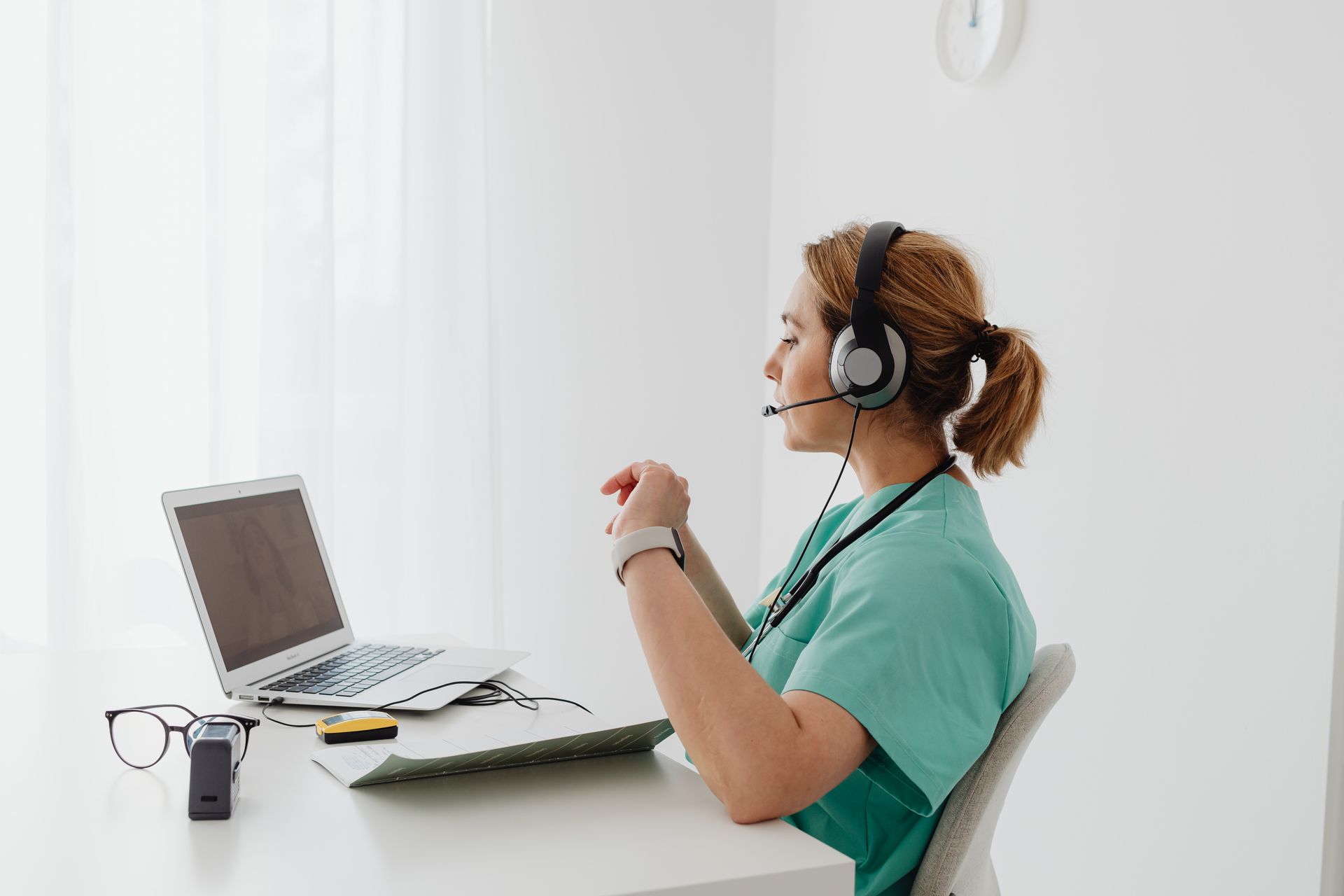
When the world shut down in March 2020 the dinner talks ended whether she liked it or not, so she took the same talk and the same ad budget and ran it online, live from home, every week.
Then a technical failure did something she would never have chosen to do on purpose. One night the live stream wouldn’t cooperate, so she played a recording of an earlier webinar instead, and it worked.
That’s the whole pivot, and it’s worth sitting with, because it runs against how most of us think about visibility. What scaled wasn’t doing more of it. It was doing it once, properly, and then stopping.
She went through five recordings before she noticed she was saying the same thing in all of them. Today there’s one, and when the ad changes, her team changes the title slide.
The second change, which mattered more
The webinar fixed the top of the funnel, but the gap in the middle was still there: an $87 consultation, then an $8,000 ask.
So in late 2020 she stopped selling the $87 visit, and a free discovery call led instead to a $2,000 consultation with the labs included. Her close rate went from 13% to 87%.
Her explanation is one sentence: people saw their own labs and they knew they needed help. The consultation wasn’t a sales step, it was the first piece of care, and it did the convincing by being useful. Today it’s $3,500.
Who, not how
Aimee doesn’t run the ads. A marketing company does that and sets up the webinar each week, another company handles everyone who registers, the calls and texts and emails, the chat during the webinar run from an FAQ she wrote once, and fourteen days of follow-up for anyone who didn’t book. Her team takes the discovery calls.
She’s explicit that she doesn’t know how the Facebook ads work and doesn’t want to, and for a lot of practitioners that sentence is the permission they’ve been waiting for.
Where it landed
The webinar costs about $2,000 and brings in roughly $18,000 in consultations and programs, which is close to what a single dinner talk used to cost her back when she was closing 13%.
In 2025 the practice ran 40 webinars, had more than 11,000 people register, and booked more than 1,300 discovery calls from them. About two-thirds of every discovery call in the practice now comes from that one recording, and it runs whether she’s in town or not.

She’s in the office six days a month, and in the evenings she’s home for dinner, or playing tennis now that the kids are grown.
What to take from it
Three things, and none of them is about webinars.
- The channel was never the problem. The same talk that failed in a restaurant worked online, because the economics around it changed, not the content.
- The gap between the free thing and the paid thing is where most practices lose people. Closing it moved her close rate more than any marketing change did.
- Built once, run weekly beats done live, run weekly. Most practitioners are making the second kind of asset without noticing.
Aimee was on our Business of Menopause panel last week, and this is one of the stories she tells.
If you want to build the version of this that fits your practice, that is what we work through in 90 Days to Leads in January.
0 Comments